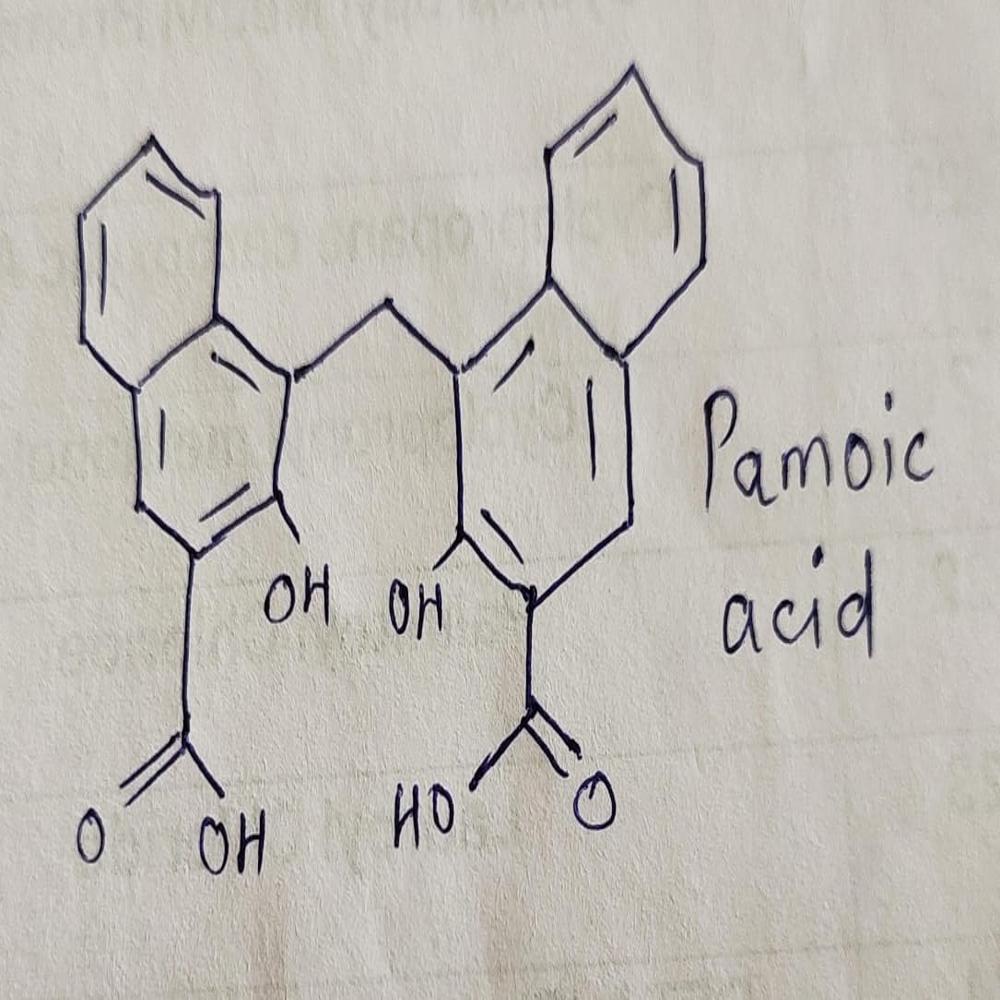
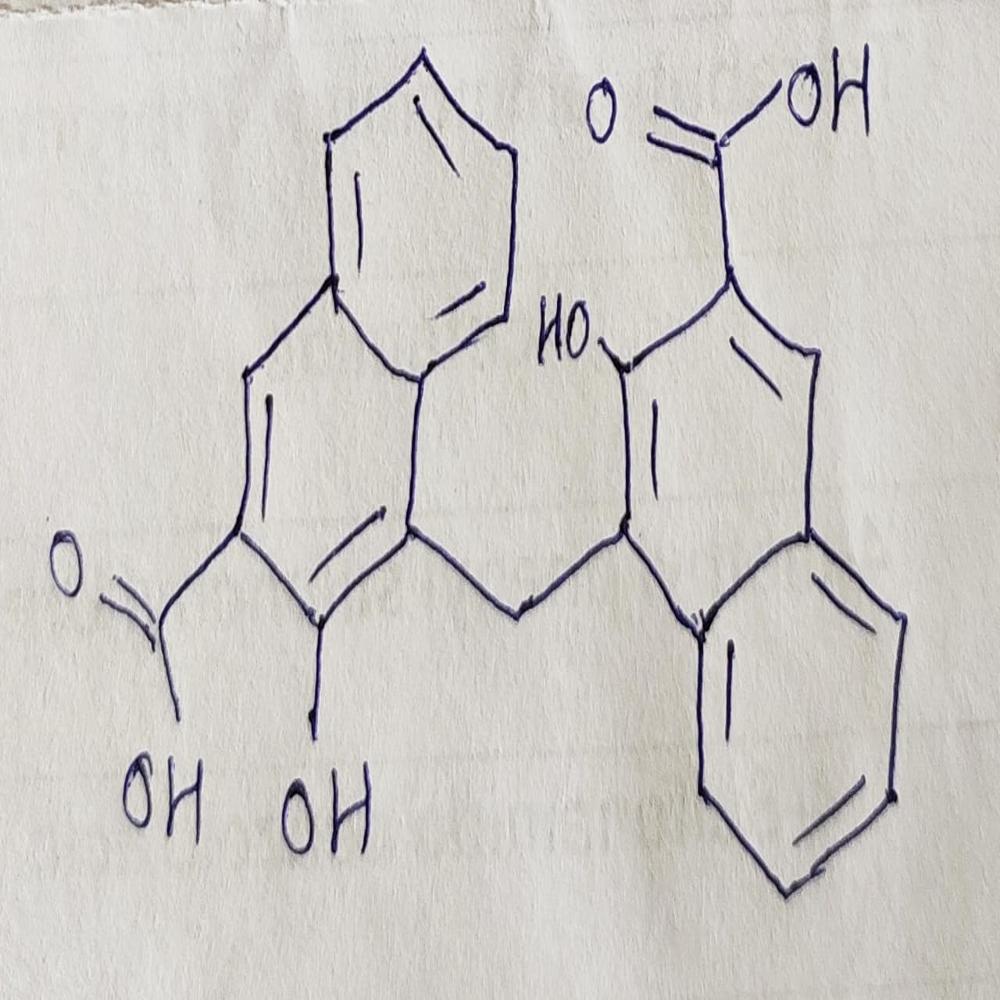
Pamoic acid

Pamoic acid
Pamoic acid
Pamoic acid

Pamoic acid Specification

  • Taste
  • Other
  • Loss on Drying
  • 0.2
  • Structural Formula
  • C23H16O6
  • Molecular Formula
  • C23H16O6
  • Molecular Weight
  • 388.37 Grams (g)
  • Storage
  • Room Temperature
  • Smell
  • Other
  • Melting Point
  • 300 C
  • Shelf Life
  • 6 Months
  • Particle Size
  • small
  • Heavy Metal (%)
  • 20
  • Boiling point
  • decomposes
  • Solubility
  • Alkali
  • Ph Level
  • 6.5-8.5
  • Medicine Name
  • Pamoic Acid
  • Chemical Name
  • Pamoic Acid
  • CAS No
  • 130-85-8
  • Type
  • Pharmaceutical Intermediates
  • Grade
  • Industrial Grade
  • Usage
  • Pamoic Acid is a dicarboxylic acid derivative of naphthoic acid, primarily used as a counterion to form pharmaceutically stable pamoate salts. These salts enhance the stability, bioavailability, and controlled-release properties of active pharmaceutical ingredients (APIs). It appears as a yellow to tan powder and is commonly used in the formulation of long-acting drug products such as antimalarials, antihistamines, and antipsychotics. Appearance: Yellow to tan powder Purity: 99% Melting Point: 300 C (decomposes) Solubility: Practically insoluble in water; soluble in alkalis and some organic solvents Moisture Content: 0.5% Assay (by HPLC or titration): 99.5% Shelf Life: 2 years under recommended storage conditions
  • Purity(%)
  • 99.7%
  • Appearance
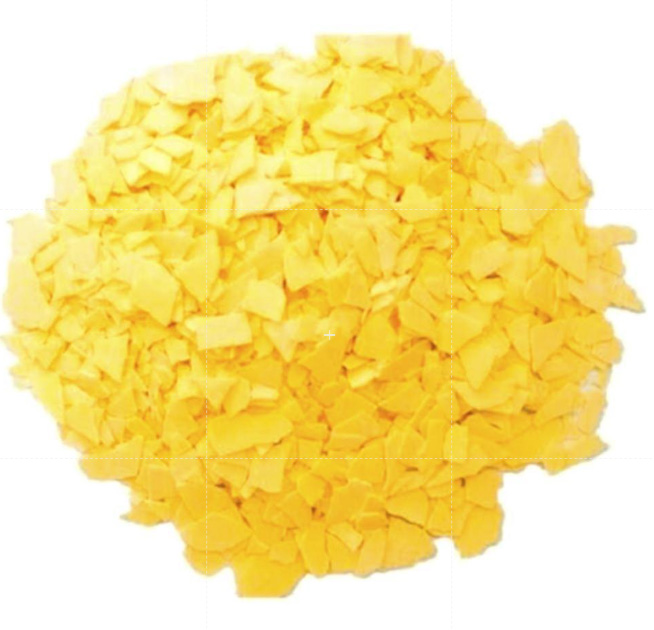
  • Yellow powder
  • Physical Form
  • Powder
 

Pamoic acid Trade Information

  • Minimum Order Quantity
  • 1 Number
  • Supply Ability
  • 10000 Per Month
  • Delivery Time
  • 1 Week
  • Sample Available
  • No
  • Sample Policy
  • Within a certain price range free samples are available
  • Packaging Details
  • 50kgs Packet
  • Main Export Market(s)
  • Asia
  • Certifications
  • ISO Certification
 

About Pamoic acid

Pamoic Acid is a dicarboxylic acid derivative of naphthoic acid, primarily used as a counterion to form pharmaceutically stable pamoate salts. These salts enhance the stability, bioavailability, and controlled-release properties of active pharmaceutical ingredients (APIs). It appears as a yellow to tan powder and is commonly used in the formulation of long-acting drug products such as antimalarials, antihistamines, and antipsychotics.

Appearance:Yellow to tan powder
Purity: 99%
Melting Point:300C (decomposes)
Solubility:Practically insoluble in water; soluble in alkalis and some organic solvents
Moisture Content: 0.5%
Assay (by HPLC or titration): 99.5%
Shelf Life:2 years under recommended storage conditions
Tell us about your requirement
product

Price:

Quantity
Select Unit

  • 50
  • 100
  • 200
  • 250
  • 500
  • 1000+
Additional detail
Mobile number

Email

More Products in API Intermediates Category

Hexa Fluoro Phosphoric Acid 60%, CAS No. 16940-81-1

Hexa Fluoro Phosphoric Acid 60%, CAS No. 16940-81-1

Price 2000.0 INR / Kilograms

Minimum Order Quantity : 1 Kilograms

Grade : Medicine Grade

Purity(%) : 100%

Adapalene  Cas No .106685-40-9

Adapalene Cas No .106685-40-9

Price 288.0 INR / Tube

Minimum Order Quantity : 1 Tube

Grade : Medicine Grade

Purity(%) : 98 %

CAS No : 106463176

Usage : Tamsulosin is used to treat men who have symptoms of an enlarged prostate gland, which is also known as benign enlargement of the prostate (benign prostatic hyperplasia or BPH). Benign enlargement of the prostate is a problem that can occur in men as they get older. The prostate gland is located below the bladder.

N-Chloro Succinimide CAS No. 128-09-6

N-Chloro Succinimide CAS No. 128-09-6

Price 1050.0 INR / Kilograms

Minimum Order Quantity : 1 Kilograms

Grade : Industrial Grade

Purity(%) : 99.5%

CAS No : 128096

Usage : It is used in pharmaceuticals, fine chemical production, and as a reagent in analytical and industrial processes requiring controlled halogenation.

N-Hexyl Chloride is 544-10-5

N-Hexyl Chloride is 544-10-5

Price 1200.0 INR / Kilograms

Minimum Order Quantity : 1 Kilograms

Grade : Other

CAS No : 544105

Usage : Nhexyl chloride is used in many industries, including chemicals, pharmaceuticals, textiles, and rubber.


Back to top